Showing posts with label game audio. Show all posts

Tuesday, 9 December 2008

FMOD on iphone


FMOD, a toolkit for the development and creation of interactive audio is now available on the iPhone.
Company quote:
"We’re proud to bring FMOD to this exciting platform. FMOD is a natural fit for the iPhone with its support for sequenced music formats such as mod and midi, compressed samples and small code size. Users can keep it small, or scale right up to take full advantage of the microphone, 3D audio and suite of DSP effects that FMOD natively supports. Being conscious of the budget nature of iPhone development we are also releasing the API at a special iPhone price of $500 per title. This includes the use of FMOD Designer. By combining the power of the iPhone and FMOD we hope to see some really creative programs and hear some great sounding games."

Could be an interesting area for student projects...

Monday, 8 December 2008

Game Audio Explosion


I've just been reading an article posted here which is primarily aimed at game audio, but sould also be useful to people working on sound for film.
Key points:
- It is important that your audio team all understand what their role within the project is and that they all know what is expected of them. This will allow them to focus their efforts more effectively and produce higher quality work. It is fine for poeple to help out with other roles/jobs but ultimately it must be one persons role to oversee each area.
- The planning stage is extremely important. In your planning, think about the characters and locations and the style/type of sounds that would be generated/created by each.
- You can use emotional responses to certain sounds to help people to "understand" the emotional content of a scene quicker and more easily.
- It is very important to consider the frequency response of the sounds that are being created and how these will work when large numbers of sounds are combined. You don't want sounds fighting for the same space within a mix.

The article also contains a few brief tips for creating effective explosion sounds.

Thursday, 27 November 2008

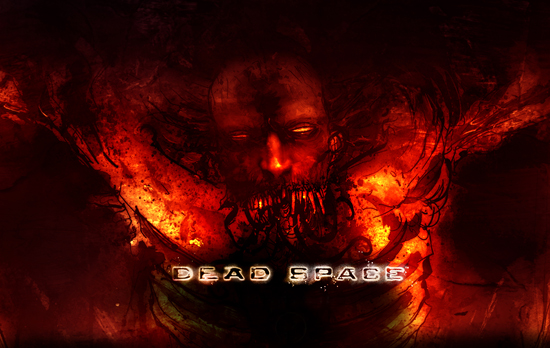
Dead Space - Sound Design


original sound version has a good interview with the Audio Director repsonsible for the new Dead Space game. In the interview he discusses the approach his team took when designing the audio (sound design/effects and music) for the game.

He talks about how the original idea form the outset was to use the sound design to establish the mood of the game and not to have separate music and sound design tracks. He wanted the whole thing to be combined into a single unit that they could use as a textural device to support the ingame action and drama.

One of the most interesting things discussed is the use of "fear emitters"; these are attached to objects and enemies within the game and the players proximity to and the numebr of these emitters was used to control parameters of the audio. This meant that, just like in Horror movies, the audio team could produce a soundtrack that "builds up to the boo" and heighten the sense of suspense within the game. The musical soundtrack was also controlled by these "fear emitters" which allows the audio system to mix, in real time, the 4 stereo layered streams based on the level of fear at any given moment.
The team also created sounds that have no real source and are just there to make you look behind you and to scare you!


edit:

Following on from this article music4games has a brief artcile written by EA's Audio Director Don Veca which looks at the music within Dead Space. He touches on things covered in the previous article and exaplains a few more things as well.
"Linear media allows the composer the luxury of knowing precisely what is going to happen; for example, the film dictates when and how long – exactly – a musical build-up will take. This is not the case, however, for interactive media where the video game player determines how the scene plays out.

To build a run-time system to interactively simulate this linear technique, we had to stop thinking like musicians and start thinking like programmers:

1. The music builds because things are getting scarier;
2. Things are scarier because there is more fear;
3. Fear is caused by eminent danger;
4. Certain objects in the world are (seemingly) dangerous.
5. Ergo, find a way to attach a sense of danger (fear) to various objects in the game world.

It occurred to us that our games already had the ability to emit point-source effects such as sound and light, so all we needed was a way to emit fear. This was the birth of the Dead Space Fear Emitter, which is simply a first-class game object that designers can place in the world or attach to other objects, most notably, the enemy alien creatures"

There is also a pretty good summary of the process involved in creating the music for the game.
The composer originally produced the 'traditional' type of ingame music but the game's creators wanted something that produced more of a texture and was not so obviously melodic, so in a method similar to temp tracks within the film industry the game's creators took sections fo music from horror movies and put these to the game to test their engine. The composer then took these themes and wrote new parts which were more improvisational and tetural in nature.

Sunday, 26 October 2008

dead space music


music4games has an interview with Jason Graves the composer working on the new release, Dead Space.
In the interview he briefly discusses his background and how he got into scoring music for games.
In terms of the game he talks about the decision to use 4 different layers of intensity within the score to allow for an adaptive score. The audio engine of the game allowed all 4 of the layers to be played simultaneously, with the gameplay itself determining the volume of each of the 4 different levels. This means that the transition between levels of intensity can be done very easily.
He also talks about some the "experimental" techniques he used when scoring for traditional orchestral instruments in order to achieve the 'scary' feel for the score.

Monday, 13 October 2008

Basic FMOD tutorial


audiotuts has a basic intro tutorial to FMOD. FMOD is an audio middleware application that allows you to design and create interactive audio environments and audio engines for particular events within a game (such as gunshots).
The tutorial takes you through creating a simple system that places one of three specified sounds for a gunshot. It covers all of the basic settings (and their meanings) that you need to worry about to setup a simple system like this one.

Sunday, 28 September 2008

Sound of Gears of War


game trailers has a series of "developers diaries" focussing on Gears of War 2.
The vid that follows the above link concentrates on the sound design, effects and music of the game.

There is some good stuff for inspiration both for game sound and for film sound.

Wednesday, 27 August 2008

audio cookbook


i've just stumbled across the audio cookbook which according to their site is:
a non-profit resource for music and sound enthusiasts made possible by contributions from Unearthed Music. The content has a slant toward the avant-garde or experimental side of audio production. Whether you have years of technical experience or you are just getting your feet wet doing sound design, you’ll find unique, interesting and useful information that might inspire you, give you an idea, or simply entertain.
Features

* One Sound Every Day is a new category where AudioCookbook.org founder John Keston creates and posts a new sound every day with a description of how it was produced.
* Posts under the Sound Design category describe techniques you can use to create unique sounds for your productions.
* The Foley category has posts that outline strange, unique, bizzarre, or just plain effective techniques to generate foley.
* Audio News contains stories from our contributors and links to articles outside of AudioCookbook.org that are of interest to sound designers and audio engineers.
* The Contributors page has brief bios of the audio professionals who are providing the content.
* Visit the Participate page if you are an audio professional interested in contributing to the content of our site.
* An integrated media plugin routes audio or video files directly into a player within posts so users can easily listen or view the examples while reading the articles.


worth checking out on a regular basis as they post lots of examples of interesting sounds and explain how they were created.

Tuesday, 19 August 2008

online sound design resources


create digital music has put together a round-up of 15 online resources geared towards sound design for both film and games.
Sound design is a fundamental aspect of nearly every form of digital media, from music production to games to commercial radio. Sometimes seen as a ‘dark art’, sound design can also be viewed as difficult and mysterious, often deterring would-be creators. Here are 15 sound design resources to help rookies and veterans alike.

The 15 sites are split into different categories:
Fundamentals: audiotuts, sound on sound, digital pro sound.
Sound for Film: filmsound, filmsounddaily, syncsoundcinema.
Sound for Games: gamasutra, GANG, music4games, IASIG, sound-music-interactive-games.
Communities & Lists: game audio forum, game audio pro, sound_design.
Other: USO.

If you're interested in either sound for film or sound for games, you should be looking at these websites (and others) on a regular basis as they all have some really useful and informative articles.
You can subscribe to an RSS feed from most of the above sites which can make keeping up to date really easy.

Monday, 30 June 2008

Article on the business side of game audio


Electronic Musician has an article called "Preparing for a career om game audio production".

Its reasonably useful, but mainly it stresses that you must know about your chosen profession and the "tools of the trade" ie software packages, audio editors, etc...