Make has an excellent video tutorial on how to make your own parabolic microphone on the cheap using an umbrella.
It looks pretty simple, and seems to work fairly effectively.
This would be a useful addition to any field recording kit.
Umbrella Parabolic Microphone - video powered by Metacafe
Wednesday, 9 July 2008
Homebrew music apps for the DS

Remain Calm has a roundup of some of the homebrew music applications for the Nintendo DS.
Some of these look pretty interesting, especially as they're free.
Whenever I see things like this I'm always really tempted to get me a DS, especially as there's the new Korg DS10 app coming out soon, which is an emulation of the Korg MS10. Plus don't forget ElektroPlankton!
 Labels:
nintendo ds,
software
Labels:
nintendo ds,
software
Monday, 7 July 2008
sound design articles

Daniel Blondin has produced some well written and interesting articles centred around the subject of sound design.
The first article focuses on vibrational energies. He talks about how everything in te universe is made up of different forms of energy and that it is possible to produce sounds/music that is harmonious with these energies and that the resulting sounds/music should be 'preferable' to non-harmonious music. Obviously not everyone will find the same music 'preferable' but he suggest that this is because we all have slightly different vibrational energies.
He cites one study in which plants were kept in sound proof rooms, one set were played Led Zeppelin and Jimi Hendrix, the other set were played Indian classical music. It was found that the plants being played rock music withered and died and in fact tried to turn away from the speakers, while the plants that were played Indian classical music grew and flourished and in fact turned towards the speakers.
This may sound like some new-age hippy rubbish, but I suppose it does make some kind of sense...
The second article looks at creature sound design, in particular vocalisation sounds.
He mentions how Ben Burtt created the sound of Chewbacca for the Star Wars films and gives some suggestions of how the same scene can be given different emotional content through the use of different kinds of sounds for the same action.
He also describes the various mechanisms that animals use to create sound; lion roars, wolf howls, whales, crickets, birds, etc... This information could prove useful as starting points when designing sound for a 'made-up' creature - think about how your creature would make sound (what kind of creature it is) and then use the relevant 'real' sound making technique as a starting point.
He then goes on to suggest some different kinds of audio processing effects that can be used creatively to create some interesting sounds, such as granular sampling/synthesis, formant filters, convolution, pitch shifting and morphing.
Other articles discuss issues such as creative commons (cc) licences, location recording with the Zoom H4 portable recorder - more an account of his experiences rather than tutorials.
Another article takes you through the creation of your own starwars lightsaber sounds. He discusses the original approach that Ben Burtt used and how to go about recreating this. He also offers advice for simulating each of the physical processes in the original methods.
Ben Burtt used very little synthesised sounds in his starwars work, rather preferring to use mechanical and organic sounds combined with real-world physical processing. This technique lent his sounds a "real-world" quality which is often cited as being the reason the soundtrack to the starwars films works so well.
Daniel has also written an article based on his experiences attempting to record underwater sounds. He documents the various approaches he used and some of the problems he encountered.
His final article entitled "The future sound of vehicles" discusses the approaches of various sound designers when designing vehicle sounds for films such as Transformers, Tron, Star Wars, Bladerunner and the Matrix.
He also describes approaches to designing your own vehicle sounds using software plugins to recreate the acoustic effects of movement on sound.
Labels:
sfx,
sound design,
sound for film
Sunday, 6 July 2008
Music Theory: Detecting intervals

audiojungle has a nice article on training your ear to recognise intervals in music (relative pitch). They also provide some songs/tunes that contain these intervals so that you can hear them in context.
These examples are all well known / popular tunes so they should help you to "hear" the intervals in you head.
The are also some little web-based training apps here
Labels:
muisc theory
Saturday, 5 July 2008
free, crossplatform audio apps

livePA has a list of 8 free, cross platform applications for musicians. There are some audio editors, sequencers, MIDI editors and score creation packages.
Some I was already aware of, but there are some new ones on the list.
Possibly an alternative to shelling out hundreds of pounds on apps like Cubase...
Some of the DAW packages support VST plugins so it is possible to produce a reasonably complex composition using these completely free tools.
Labels:
software
flow-chart software

whilst reading the maxmsp user forum I came across a link for graphviz which is a visualisation / flowchart creation software.
Graphviz is multi-platform and free to download.
I've not had much of a chance to play around with it, but I can imagine it would be very useful when it comes to planning complex projects.
Labels:
software
reverse reverb effect
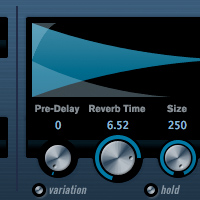
Audiotuts has a well written tutorial on how to create the ubiquitous reverse reverb effect. There are some nice sreenshots which make it even easier to follow.
Labels:
sound design
Subscribe to:
Posts (Atom)
